How to Choose Which is Best for You
As solar energy adoption accelerates across the country, homeowners and business owners alike are exploring how solar panels can reduce energy costs and support long-term sustainability. While residential and commercial solar panels serve the same core purpose, converting sunlight into electricity, their design, scale, efficiency, and installation methods differ in several important ways. Understanding these differences can help you choose the best solar solution for your property and long-term energy needs.
Whether you’re looking to lower your utility bills or power a large commercial facility, this quick comparison breaks down everything you need to know when deciding between residential and commercial solar systems.
Panel Size and Power Output
One of the biggest differences between residential and commercial solar systems is the size and capacity of the panels.
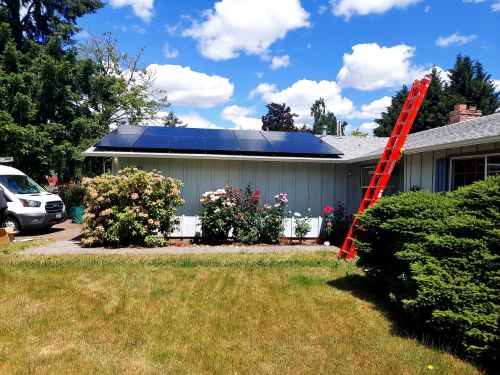
Residential solar panels typically measure around 65 inches by 39 inches and produce 350 to 430 watts per panel. They are designed to fit aesthetically on pitched roofs and blend with home architecture. Home solar arrays are generally smaller, ranging from 4 kW to 12 kW depending on household energy consumption.
Commercial solar panels, on the other hand, are significantly larger at 78 inches by 39 inches on average and deliver 450 to 600+ watts per panel. Businesses often require much higher electricity production, so commercial arrays commonly range from 50 kW to several megawatts. The larger panel size reduces installation time and maximizes output on large, flat rooftops or open ground-mount spaces.
Installation Methods and Structural Requirements
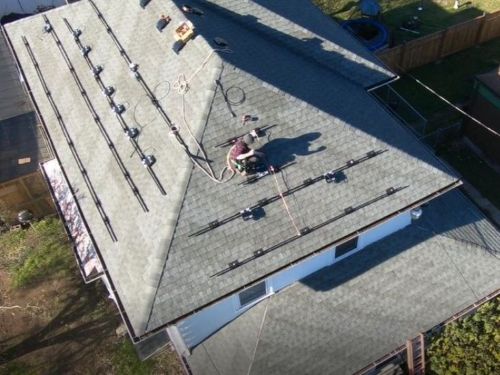
The installation process for residential systems focuses on blending efficiency with aesthetics. Panels are installed on pitched roofs using racking systems designed to minimize impact on shingles while ensuring durability and proper ventilation.
Commercial installations tend to be more complex. Most commercial buildings have flat roofs, which allow for ballasted mounting systems that don’t require roof penetration. These systems must account for wind load, structural engineering, and optimal tilt for energy production. Large warehouses, schools, and office buildings often also have the option for ground-mounted or carport solar installations.
Because commercial projects involve larger arrays and more technical requirements, they often require a longer design and permitting process. Working with a qualified solar provider like Pro-Stat Solar Group ensures your system is engineered for safety, longevity, and maximum performance.
Efficiency and Performance Differences
Commercial solar panels are typically built with higher efficiency ratings to meet larger power demands. Many commercial modules use monocrystalline solar cell technology with efficiencies in the 20–22% range, while residential panels fall closely behind at around 18–21%.
In addition to higher output, commercial panels may incorporate advanced features such as bifacial designs, half-cut cells, and enhanced temperature tolerance. A type of technology that can significantly increase energy production, especially in large installations.
Despite these differences, both residential and commercial systems provide clean, reliable energy and offer strong long-term financial benefits through reduced utility bills and federal and state incentives.
Cost Considerations
While residential solar systems have a lower total cost, the cost per watt is typically higher due to smaller project scale. Homeowners may expect system prices in the range of $12,000–$30,000 before incentives, depending on size and energy needs.
Commercial systems, although more expensive overall, benefit from economies of scale, leading to a lower cost per watt. Businesses also have access to additional tax advantages, such as accelerated depreciation (MACRS), making commercial solar a financially strategic investment.
Whether you’re a homeowner or a business owner, Pro-Stat Solar Group can help you evaluate incentives and financing options to maximize your return on investment. Contact us today for a customized solar assessment.
Which Type of Solar System is Right for You?
Choosing between residential and commercial solar depends on your property type, energy usage, budget, and long-term sustainability goals.
- If you’re a homeowner seeking lower electricity bills, improved energy independence, and a clean-energy lifestyle, residential solar is likely the ideal solution.
- If you manage a business, school, or industrial facility with high energy demand, commercial solar offers large-scale power production, long-term cost savings, and positive brand impact.
No matter the size of your solar project, the experts at Pro-Stat Solar Group are here to help you evaluate your options and design a system tailored to your energy goals.
Understanding the Difference Between Solar Panels
Residential and commercial solar panels share the same purpose but differ in size, power output, installation methods, and financial structure. Understanding these distinctions helps property owners make informed decisions about which solar solution best fits their needs. Solar energy is a long-term investment in both savings and sustainability, and choosing the right system ensures you get the highest value and performance.
Ready to explore solar for your home or business? Contact Pro-Stat Solar Group for a free consultation and custom quote.